
Stainless steel 304 is the world’s most used type of stainless steel product. We put out trust in their strength, corrosion resistance and polished look which is what makes them the reliable choice for industries which range from construction to food processing. If you are going to source SS 304 pipes in India or for export projects this guide is for you which will help you out in choosing the right grade, technical details and what affects quality and price.
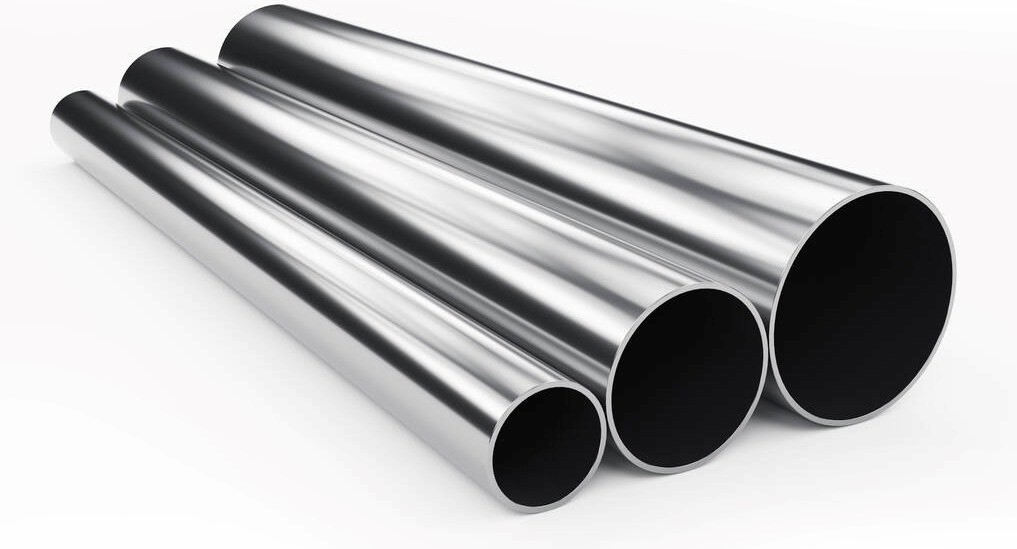
What Are Stainless Steel 304 Pipes?
SS 304 is an Austenitic stainless steel from the 300 series. It has a balance of chromium and nickel which gives it excellent corrosion resistance and also good mechanical properties. The result is durable pipes that are easy to work with and perform well in both high and low temperature conditions.
Why SS 304 Pipes Are Popular
- Strong corrosion resistance in most environments
- Smooth surface finish suitable for hygiene-critical industries
- Good weldability and formability
- Stable performance in both indoor and outdoor applications
- Cost-effective compared to higher alloys like 316
These qualities make SS 304 pipes a universal choice for projects where long-term reliability matters.
Mechanical Properties
- Tensile strength: 515 MPa minimum
- Yield strength: 205 MPa minimum
- Elongation: 40%
- Hardness: 90 HRB maximum
These values help determine how well the pipe performs under pressure, load, or bending.
Types of Stainless Steel 304 Pipes
Seamless SS 304 Pipes
Made without welded joints and offer higher pressure handling with a smooth internal surface.
Uses: High-pressure lines, chemical plants, boilers, heat exchangers.
Welded SS 304 Pipes
Manufactured by welding strips of stainless steel. These pipes are more affordable and ideal for general use.
Uses: Structural applications, water supply lines, low-pressure systems.
ERW SS 304 Pipes
Electric resistance welded pipes with good dimensional accuracy.
Uses: Automobile components, transportation, general engineering.
EFW SS 304 Pipes
Electric fusion welded pipes suitable for large diameter applications.
Uses: Oil and gas, petrochemical, and offshore structures.
Common Applications of SS 304 Pipes
- Food and beverage processing industry
- Water supply and plumbing systems
- Chemical and petrochemical industry
- Pharmaceuticals
- Automotive parts
- Architectural and structural use
- Heat exchangers and condensers
- Dairy and brewery equipment
Its hygienic properties make it ideal for industries requiring clean surfaces.
Key Features Buyers Look For
- Corrosion Resistance
- Temperature Resistance
- Weldability and Fabrication
- Surface Finish
- Dimensional Accuracy
For engineering and structural use, consistent OD, ID, and thickness matter. Reputed suppliers maintain tighter tolerances.
Standard Sizes and Specifications
- Outer diameter: 6 mm to 600 mm
- Wall thickness: 0.5 mm to 40 mm
- Length: 6 m or custom
- Schedule: SCH 5, 10, 20, 40, 80, 160
- Standards: ASTM A312, A213, A269, A249
- Forms: Round, square, rectangular
Providing exact requirements helps in accurate pricing.
How to Choose the Right Supplier
- Mill test certificates (MTC)
- Consistent grades and heat numbers
- Accurate dimensions and smooth finish
- Seamless and welded options
- Custom cutting and export packaging
- Experience in handling bulk and project orders
Nehametal supplies Stainless Steel 304 pipes along with a full range of stainless steel and special alloys products, making it easier for buyers to source everything from one place.
Final Thoughts
Stainless Steel 304 pipes are a dependable choice for buyers looking for corrosion resistance, durability, and clean surface properties. Whether used in industrial systems, construction, food processing, or export shipments, choosing the right grade and supplier is key to long-term performance and cost savings.